The History of our Club
It was originally established as the Peninsula Region and held its first meeting on 17 September 1993 at the home of Neville May. Max Knowles was President and Tom Bartie Treasurer: three men and a lathe.
Initially, meetings were held in Members’ homes. Renowned turner John Ewart later offered his Brookvale business/workshop, The Woodturning Centre, for monthly meetings on a Sunday night.
In July 1997 Brian Ramsey offered a new venue: his boatshed at Castlecrag. It was not easily accessible and had only one lathe but it served a valuable purpose: a central location where people could socialise as well as practice woodturning.
Then in 2000, the Club moved to an old Scout Hall at the back of the Salvation Army property in Collaroy. Dubbed ‘Possum Hollow’ by Members, it was very basic and turning took place on an exposed concrete apron.
“It was pretty dank,” recalls Meg Webster with a laugh. “We were in the underneath, sort of dungeon part, where we kept the lathes. We used to roll them out onto a concrete apron and we had a canvas shelter if it was raining.”
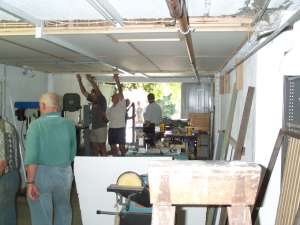
Then in September 2006 a larger space was found under the RSL at North Narrabeen. It was about the size of a large double-car garage.
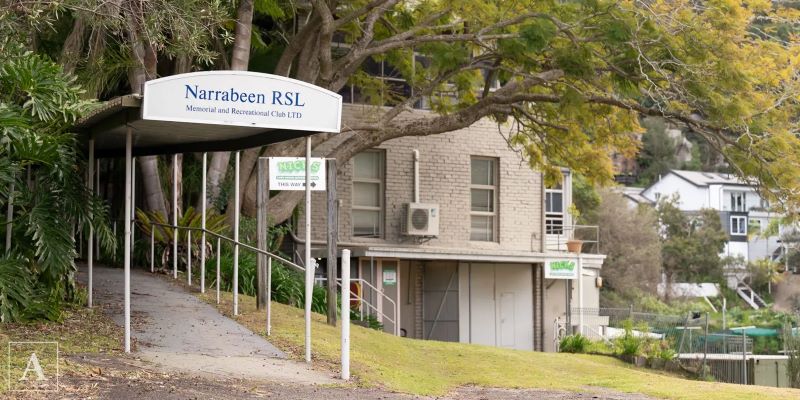
The Club now had several lathes and its presence at local craft markets expanded to include live demonstrations, as well as selling Members’ work. However the Narrabeen site had severe limitations, and Members often had to queue for a lathe, and there was no space for expansion.
As the Club grew and matured, it needed to formalise its governance arrangements, and sought incorporation as a registered organisation with the NSW Government Office of Fair Trading.
The formal Certificate of Incorporation for Sydney Northern Beaches Woodturners Incorporated, INC 9885309, was issued on 24 March 2006, and a special general meeting was held on 15 October 2006 to adopt new model rules for the Club, to discontinue “Peninsula Region” as an organisation, to approve the transfer of assets, and to formally elect office bearers.
Jack Butler was elected inaugural Club President, Barry Brown Vice-President, Floyd Bower Secretary and Barry Grainger Treasurer.
“It was resolved that all former financial members of Sydney Woodturners Guild Inc Peninsular Region as set out in the list tabled at the meeting be accepted as the first Members of this Incorporated Association.” – minutes of meeting, 15 October, 2006.
As a registered association, the Club has statutory obligations including that:
- The Club has an elected Committee which manages its affairs;
- Members of the Committee carry out their duties with due care and diligence for the benefit, as far as practicable, of the Club;
- Any profits should be used to further the objects of the Club.
- The Club provides a signed annual return to the Department of Fair Trading.
The Sydney Northern Beaches Woodturners Inc, a non-profit organisation, works to promote the art of woodturning, inspire and encourage its Members to acquire new and challenging skills combined with social engagement in an active, friendly, cooperative environment.” – Club mission statement.
Safety has always been paramount. The minutes of 18 March 2007 record a report of an “accident in workshop as a result of a turning coming adrift and causing a contusion to the brow of a member.”
It was noted that the member:
- was not wearing face protection
- had not checked that his work was securely fastened before proceeding.
Members were reminded to wear safety glasses and/or a face shield. Curiously, no mention was made of the need to check your wood is securely held to the lathe.
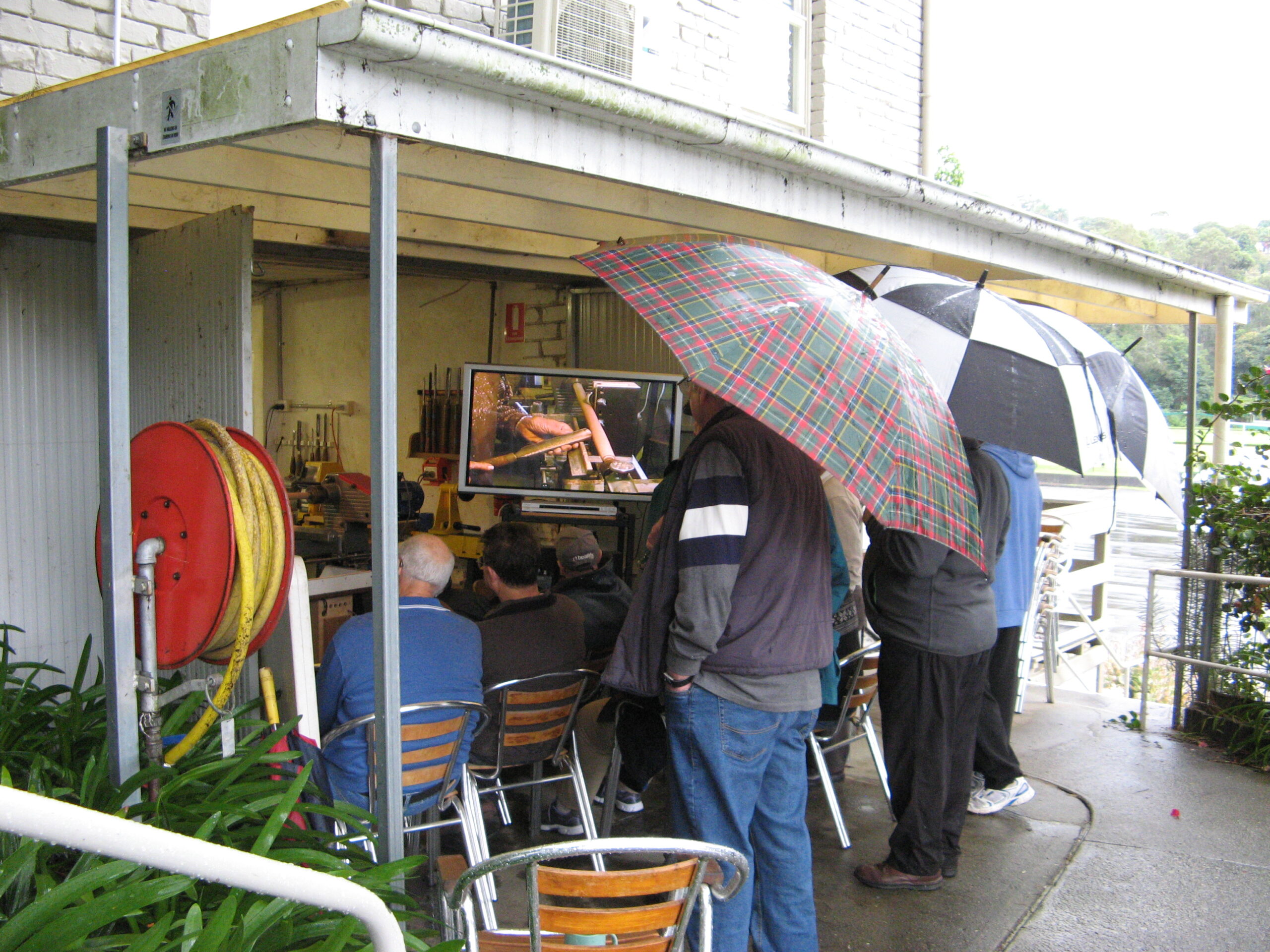
By the early 2010s, growth once again dictated a search for new, more permanent premises. A number of locations and venues were considered, but progress was painfully slow and there were constant and painful reminders of the shortcomings of Narrabeen. Meetings were held outdoors, and if it was raining, well, bring an umbrella!!!
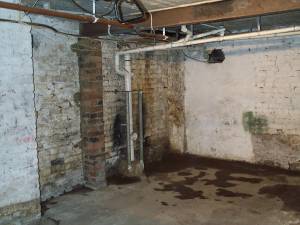
“There was no opportunity to grow; it was not a place we could call home, and the RSL was going into decline. So the writing was on the wall,” recalls Tim Macgregor.
And then one day there was a knock on the door from the landlord …
“We were informed that the (RSL) Club has commenced a new lease for the premises from the RSL sub-branch and that as a consequence the Board is reviewing all aspects of the Club, including all users of its facilities. They therefore needed to increase revenue.” – minutes of meeting, 11 March, 2019.
Now there was real urgency to the task of finding suitable accommodation: new, more permanent premises – a place the Club could truly call home, with security of tenure, and a space suited to the Club’s needs.
A Place we could call Home
“The initial meeting was held at Forestville Girl Guides Hall, Forestville Ave, Forestville on Friday 12 July 2019. Gordon Scott, Barry Brown and Owen Holden were shown through the premises by (Northern Beaches Council Executive Manager Property) Campbell Pfeiffer. It was thought by us that this building could be very suitable for use as our future workshop, with some modification.” – minutes of meeting, 10 December, 2019.
The Club had pursued many other leads, but this one looked the most promising. The one-time Girl Guide Hall had been vacant for some time and was an ideal space, though typically in need of repair. Importantly, it would be exclusive to the Club.
“This is perfect,” recalls Barry Brown, Vice-President at the time and who had spent countless hours looking at venues, writing submissions and lobbying Council. “Council didn’t know their luck to be getting somebody like us to come in and fix their building. It was probably going to be torn down if we didn’t.”
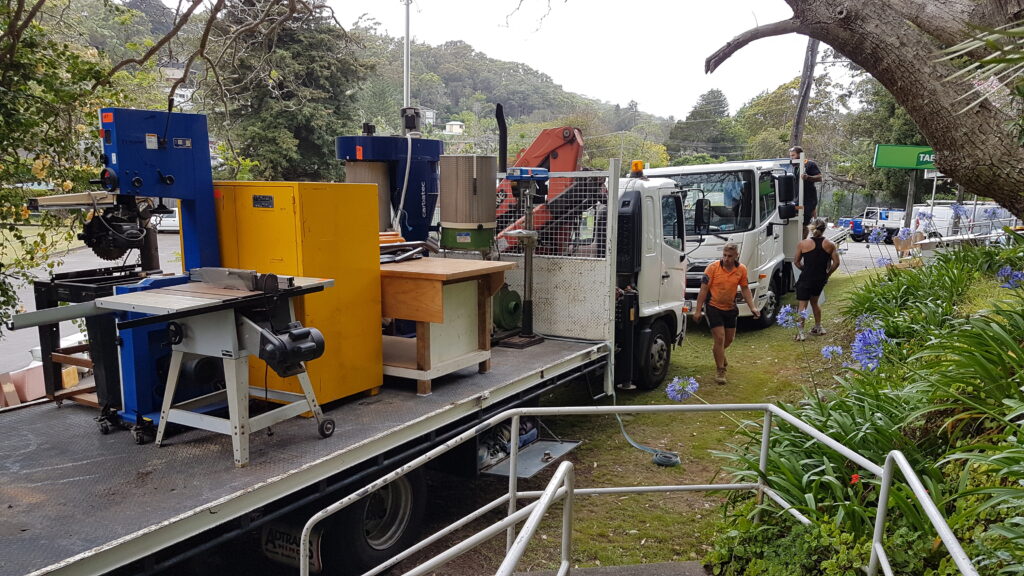
And so the shift to a new home was on. Project Jacaranda had several work packages including packing up Narrabeen, safely transporting all the machinery to Forestville, and most importantly, transforming the drab empty space into a light and airy modern workshop and Clubhouse with meeting rooms, facilities, and amenities.
“It had bare concrete block walls, no paint on the place whatsoever, the kitchen was a wreck, the ceiling was falling to pieces, there was barely a light globe in the place, and downstairs was just a mess – full of junk,” recalls Jack Butler, Club President at the time. But he could see the potential.
“So Lloyd (Ross) and I drew up these plans for what we could actually do with the place. There was plan 1, then variation 2, variation 3 and variation 4.”
“The biggest challenge in completing the plans was in accommodating everyone’s input and ensuring we had a sensible layout,” said Lloyd, a draftsman in the telecommunications industry in an earlier life.
If Jack Butler was project manager, then Ken Cooper was prime contractor, working most days from 7am until 4pm and with a host of Members helping out with essential tasks from painting to wall framing and sheeting, to making window-frames.
“Ken didn’t let anybody do anything rough. It had to be done right,” continues Jack. “I ended up having a good tea break.”
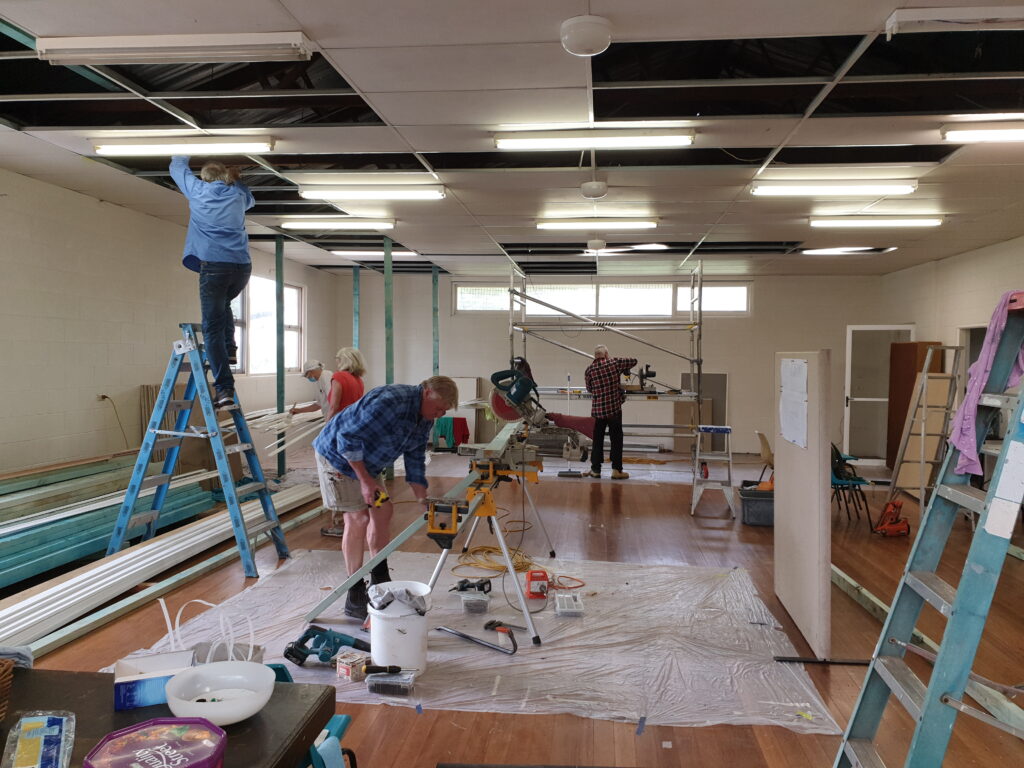
Greg Beaman was master electrician and completed all the wiring, including installing safety switches, and a new switchboard. Libby Beaman was always on hand with paintbrush and roller.
Ken recounts the day the sky almost fell in.
“The ceiling panels were all pretty filthy. So we laboriously took them all out, vacuumed all the rat droppings and leaves and other rubbish off the top of them, then we laid them out on tarpaulins on the floor and repainted them all and put them all back in,” he said.
“The roof was leaking. It was when we had the ceiling tiles out that I realised you could see light in quite a few places. I brought in my abseiling harness and got up (on the roof) and pushed all the leaves off.
“And then I had Greg Beaman downstairs with a long stick and wherever he could see light, he would tap on the roof and I would go to that noise and put sealant on (the hole). We went over the whole roof like that.”
The master plan for Forestville set out a dedicated space for the lathes and associated machinery, and then the construction of a partition wall to separate the workshop area from the amenities including the kitchen, a small meeting room, an office/library and a large area which would serve as a demonstration area and event space, as well as an area where Members could hold formal Club meetings and social gatherings.
One day a set of kitchen cabinets donated by Bunnings arrived, another day wall paneling, another day timber for framing the walls. Council maintenance teams also painted the outside walls, repaired the roof gables, and built the concrete slab and annex to house the dust extractor.
“A lot of people put in a lot of effort,” says current President John Donnelly. “Many hands made light work but it was led by Jack, and with Lloyd, and Barry. Barry was very good at negotiating with the Council.”
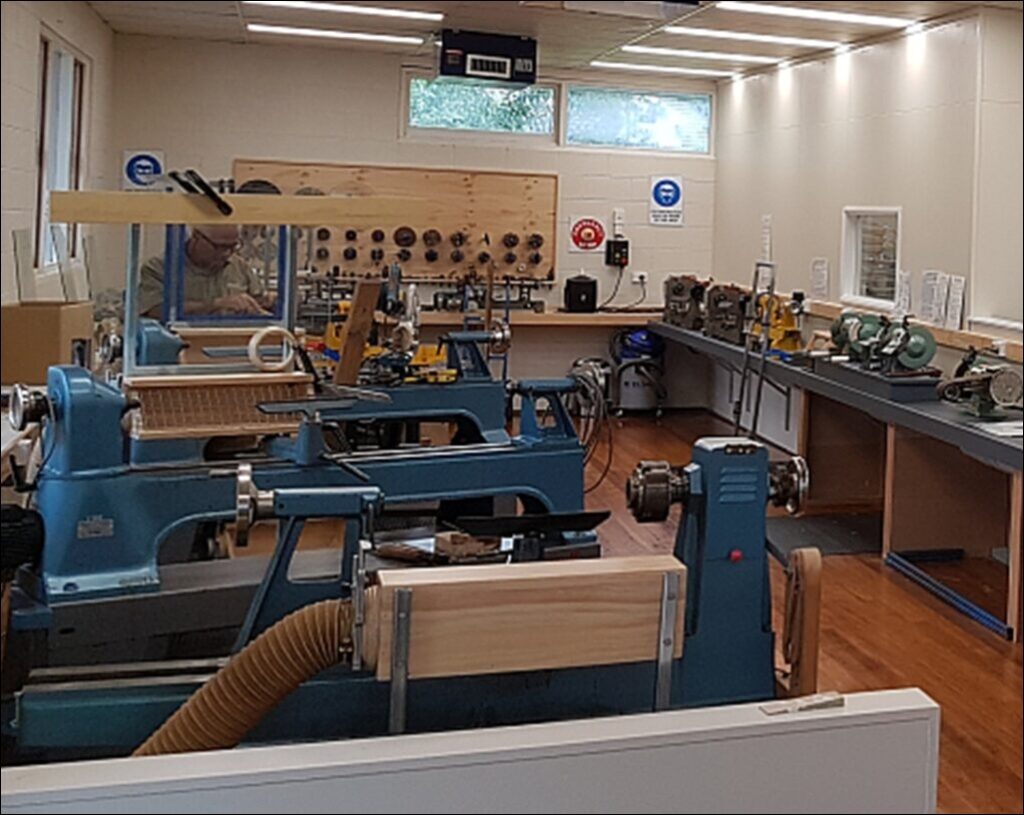
The result is a Clubhouse that is light and airy, with modern lathes and other machinery housed on the main workshop floor augmented by a fully-ducted dust extraction system and ceiling-mounted room air filters; and a separate area which includes a neat and modern kitchen, male and female toilets, an office/library and a large demonstration area which also serves as the Club meeting room and a social/event space.
There is also a basement area for storage of surplus equipment and a handy wood bank. The Club receives occasional equipment donations from retirees, and former Members and deceased estates.
Today the Club is a registered organisation with appropriate governance arrangements such as the annual election of office-bearers, accountability reporting and minuted records of meetings, a healthy bank balance, excellent assets, and an exclusive lease on a premises that Members can call their own.
“This whole thing was built from teamwork, with like-minded people wanting the same result: a good workshop where we can train people, and where people can work themselves if they want to,” says Barry Brown.
“It took a lot of time, a lot of effort, a lot of work, a lot of discussion, a lot of negotiation. It wasn’t just me involved. People have been involved in doing it for the past 20 years.”
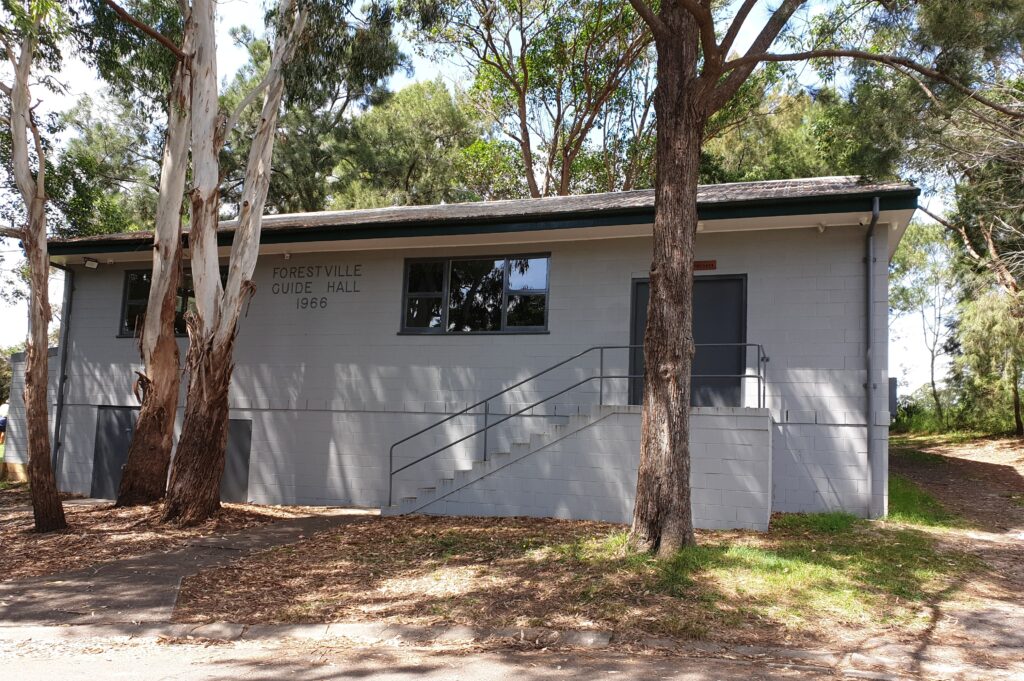
Looking back on the evolution and growth of the Club, Jack Butler says: “We have grown from meeting in Members houses – they used to do a circuit, going from house to house – to Collaroy and Narrabeen as dumps, and then we came here to a dump – but a dump you could actually do something with and fix up.
“(Forestville) just wanted a lot of ‘doing up’. Members threw their weight behind it and now we have this beautiful place, light and airy, and with nice machinery. There’s a good feel about the place.”
And in 2022, after more than 20 years serving in various roles including an extended period as Club President, Jack Butler decided it was time for another ‘tea break’.
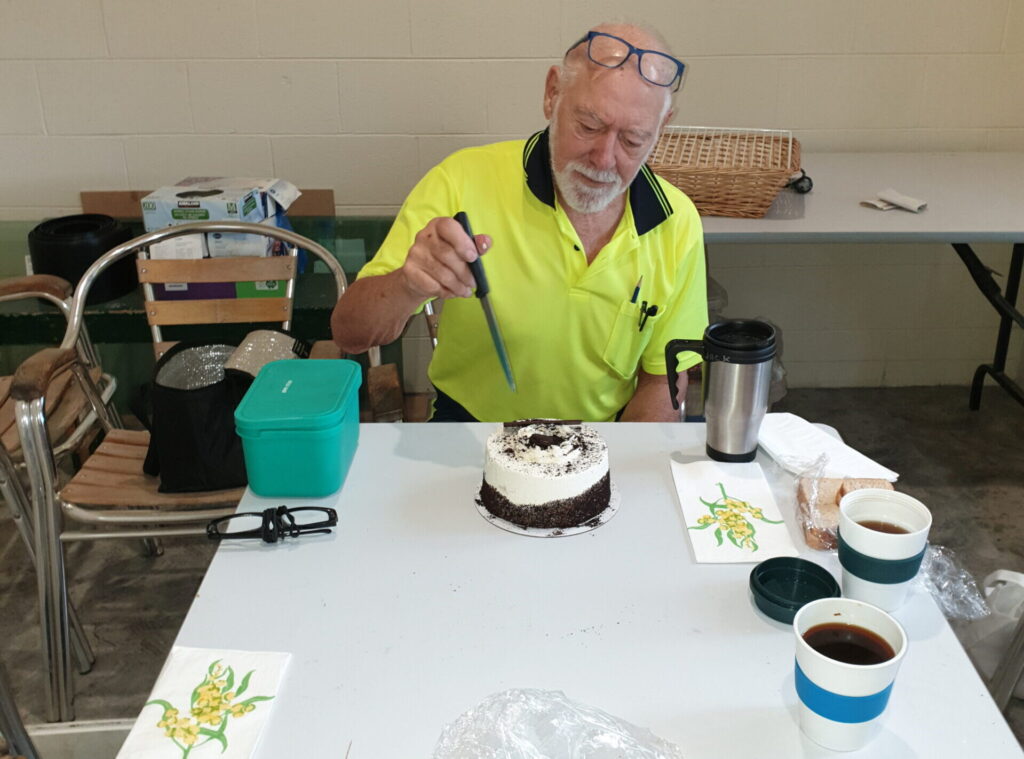
“The new President Barry Brown spoke of the enormous contribution that the retiring President and Life Member Jack Butler had made over many years. We would not be here today if it was not for Jack, his vision, determination, skill and hard work. Words are mot adequate to express our thanks. All members present acknowledged this by sustained acclimation.” – minutes of meeting, 17 July, 2022.